
'While economic ties are making incremental progress, it is in the security and strategic domains that the India-Japan synergy is more compelling,' says Dr Rajaram Panda.
Considering the common linkages, high-level trust, complementarities, and convergent interests between the two nations, Malaysia has the potential to become India's key partner in Southeast Asia, says Dr Rahul Mishra.

It is often said that the India-Indonesia relationship is overshadowed by mutual neglect.
'India's relationship with China has been and will continue to be complex, delicate and sensitive,' says Rup Narayan Das.
United States President-elect Joseph Biden has always been a strong supporter of India and India-US partnership since his days in Senate and later as a Vice-President.

'The virus of trust deficit seems to be taking a toll of the friendship built over the years by succeeding leaderships of the two countries,' notes Rup Narayan Das.

The US election campaign has provided plenty of ammunition for the CCP to make its case that its political system is superior.

It was better to first build a single-rate GST with a low rate, achieve full mastery of this, and then consider more complex possibilities such as high rates and multiple rates.

'Unlike Trump, who has an isolationist approach, Bolton would like to roam around the world, trampling upon any sign of dissent,' says Ambassador T P Sreenivasan.
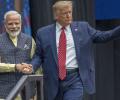
'The challenge before the two countries is to turn the peak into a plateau and enter an irreversible phase of cooperation,' notes Ambassador T P Sreenivasan.
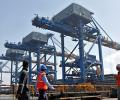
Special Economic Zones are likely to be central to realising Prime Minister Narendra Modi's ambitious Make in India agenda.

Atul Keshap, a senior Indian American career diplomat and one of the rising stars in the United States foreign service, has been picked by Nisha Desai Biswal, the newly appointed assistant secretary of state for South and Central Asian affairs, to be her deputy.

'We have been bold and innovative on recognition in the past and we do not need to rush,' advises Ambassador T P Sreenivasan.

Cos ask US treasury to discuss data localisation norms with Indian officials at all platforms the two countries would meet, including G-20, US-India Strategic Dialogue, and IMF Annual Meet.

India's IPR framework and enforcement were comparable to those in developed countries

Hectic preparations are on at the newly-formed Niti Aayog to welcome the first Vice-Chairman Arvind Panagariya and other members whose appointments were approved by Prime Minister Narendra Modi on Monday.

The NDA government was initially reticent about fleshing out its economic strategy for the future. But now that it has taken enough bold initiatives on the economic front it must have the confidence to tell us more about its approach going forward, says Abheek Barua.
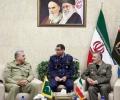
'Tehran senses that the Modi government is inexorably gravitating toward the US-Israeli-Saudi axis, jettisoning India's traditional independent Gulf policies,' notes Ambassador M K Bhadrakumar.

Gokhale and Pompeo expressed satisfaction over the significant progress and the quality of the India-US Strategic Partnership

Diplomats agree that amid stormy relations with China and Pakistan, Modi has posted impressive foreign policy successes, notes Aditi Phadnis.

'We are looking at the Budget with the hope that it will address all issues even at the cost of exceeding the fiscal deficit target.'

As the pandemic unfolded, the India-China relationship has come under severe stress. To restore normalcy, agreements between the two countries must be respected scrupulously in their entirety. Where the Line of Actual Control is concerned, any attempt to unilaterally change the status quo is unacceptable, declares External Affairs Minister Dr Subrahmanyam Jaishankar.

Five longtime Republicans -- K V Kumar, Puneet Ahluwalia, Suhail Khan, Ajay Kuntamukkala and Harry Walia -- have been named to the GOP's Asian Pacific American Advisory Council.

Chinese equipment contracts had been given by many public sector undertakings and government companies for their networks, even in sensitive places such as the north east.

The amendment urges the US to enhance India's military capabilities in the context of combined military planning, and promote co-production/co-development opportunities.
The GST's significance for the BJP's politics is as important as its implications for the Indian economy, says A K Bhattacharya.

President Ram Nath Kovind signed the proclamation for imposition of central rule in the state, which plunged into a political crisis in June after the Mehbooba Mufti-led coalition government was reduced to minority following withdrawal of support by the 25-member Bharatiya Janata Party in the state.

'The optimistic advice might be "fasten your seat belts" and the pessimistic one might just turn out to be "brace for impact",' says Claude Smadja.
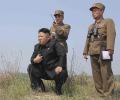
Pyongyang wants the world to recognise its nuclear capability, says Srikanth Kondapalli.
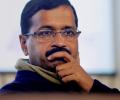
The 350-member national council of the Aam Aadmi Party will meet on March 28 and it may potentially lead to the formalisation of deep factions within the two-year-old party.

The 'Make in India' concept in the defence sector has the potential to help India meet 70 per cent of its defence needs in a few years.

'India appears to have stood its ground on strategic autonomy by resisting US pressure on Russia, China and Iran, but succumbed to the temptation to walk into a tighter embrace in defence cooperation, a high priority of the Trump administration,' notes Ambassador T P Sreenivasan.

The joint statement issued after Prime Minister Narendra Modi and President Barack Obama's first-ever summit is high on intent and ambition. Notably missing from the statement is India's refusal to be America's partner in its war against ISIS.

'Non-separation of religion from politics is India's most daunting challenge'

'Curbs will again lead to the grey market developing, undoing all the work done over the last two-and-a-half years.'

Now, India and US can jets, warships can use Indian bases

Jewelers also want import duty on gold to be reduced from the current 10 per cent to at least 5 per cent.

Indians at large harbour a notion that their country is cherrypicking out of the American basket of goodies, but the policymakers in Delhi and the political leadership are well aware that it can only be a pipe dream since a military alliance with a superpower is a profound irrevocable commitment, observes Ambassador M K Bhadrakumar.

'You cannot fight a disease as complex as COVID-19 without a carefully calibrated, localised response.'
